Protein for Muscle Gain
How Much You Need, Why, and the Easiest Way to Hit It
The Bottom Line
Most lifters need 1.6–2.2 g/kg bodyweight (0.7–1.0 g/lb) for optimal muscle growth
Higher protein during a deficit (2.0–2.4 g/kg) helps preserve muscle
Distribution across 3–5 meals is slightly better than 1–2 meals, but total daily intake matters more
The "anabolic window" is largely a myth to its true impact. just hit your daily target.
If you're not hitting your protein target consistently, nothing else in your nutrition matters much
The Principle
"I eat pretty healthy" is what most people say before discovering they eat only 80 grams of protein per day and wonder why they're not building muscle. It’s time to pick up the fork.
Protein is the only macronutrient that directly provides the building blocks for muscle tissue. You can train perfectly, sleep well, and manage stress, but if protein intake is insufficient, muscle growth will not happen. It’s biology. Your body need materials to create mass on your body.
The good news: the research is clear on how much you need. The bad news: most people consistently undershoot, especially when busy or distracted. The fix isn't complicated, it's consistent.
What the Research Says
There's a clear protein threshold for maximizing muscle growth. Multiple meta-analyses have come upon similar numbers. Morton et al. (2018) found that protein intakes up to ~1.6 g/kg/day (0.73 g/lb) maximized muscle protein synthesis in resistance-trained individuals. Beyond this, additional protein shows diminishing returns.
Higher intakes may help during caloric restriction. Research by Helms et al. (2014) and others suggests that during a caloric deficit, higher protein intakes (up to 2.2–2.6 g/kg/day) may better preserve lean mass.
Protein distribution matters somewhat. Studies show that distributing protein across 3–5 meals produces slightly better muscle protein synthesis than consuming it all in 1–2 meals. However, total daily intake matters more than perfect distribution.
Protein quality matters, but not as much as you think. Animal proteins are generally more bioavailable than plant proteins, but vegans and vegetarians can absolutely build muscle with proper planning and slightly higher total intake.
The "anabolic window" is largely a myth. Research shows that post-workout protein timing is less critical than previously believed, as long as total daily intake is adequate. You don't need to chug a shake within 30 minutes of your last rep.
The Nuance
Body composition affects targets. If you're significantly overweight, basing protein on total bodyweight can lead to unnecessarily high targets. Use lean body mass or target bodyweight instead.
Activity level matters. These recommendations assume regular resistance training. Sedentary individuals need less protein for general health (though still more than the outdated RDA of 0.8 g/kg).
Age affects protein needs. Older adults (50+) may benefit from slightly higher intakes due to reduced anabolic sensitivity (anabolic resistance). Aiming for the higher end of the range makes sense.
More isn't always better. Beyond ~2.2 g/kg/day, additional protein doesn't appear to provide extra muscle-building benefits for most people. It won't hurt, but it won't help much either—and it's expensive.
The Plan
Your Protein Target
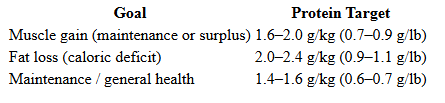
Example calculations:
180 lb lifter, muscle gain: 180 × 0.8 = 144 g protein/day
200 lb lifter, fat loss: 200 × 1.0 = 200 g protein/day
150 lb lifter, maintenance: 150 × 0.7 = 105 g protein/day
If you're significantly overweight, use your target bodyweight or estimate lean mass (total weight minus fat mass).
How to Hit Your Target (Without Obsessing)
Strategy 1: Anchor Protein at Every Meal
Build each meal around a protein source first, then add everything else.
Breakfast: Eggs, Greek yogurt, or protein smoothie, and overnight oats are phenomenal.
Lunch: Chicken, fish, beef, tofu, or legumes
Dinner: Another protein source, similar to lunch
Snacks (if needed): Cottage cheese, jerky, protein bar, or shake
Strategy 2: Know Your High-Leverage Foods
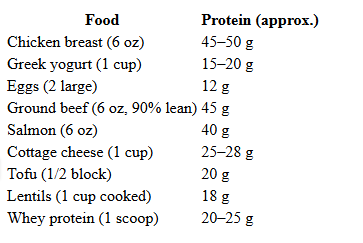
Strategy 3: Use Protein Supplements Strategically
Supplements aren't necessary, but they're convenient. Use them to fill gaps, not replace real food.
Good use cases: - Post-workout when you can't eat a meal - Breakfast on busy mornings (shake takes 2 minutes) - Before bed if you're short on daily target - Travel when food options are limited
Strategy 4: Front-Load Protein Earlier in the Day
Most people eat low-protein breakfasts and back-load protein at dinner. This often leads to falling short. Aim for 30–50 g at breakfast, and hitting your target becomes much easier.
High-protein breakfast options: - 3–4 eggs + Greek yogurt = 35–40 g - Protein smoothie (whey + Greek yogurt + milk) = 40–50 g - Cottage cheese + eggs = 35–40 g
Strategy 5: Track for One Week, Then Estimate
You don't need to track forever. Track your food for one week to see what your baseline is. Most people discover they're eating 50–70% of what they thought. Once you know your patterns, you can adjust by feel.
Sample Day at Different Protein Targets
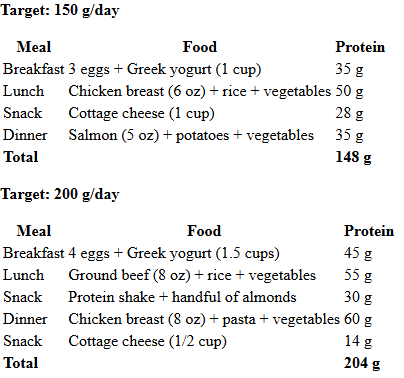
Common Mistakes
Relying on "protein is in everything." Yes, bread has some protein. No, it won't help you hit 150 g/day. You need concentrated protein sources.
Skipping breakfast protein. Starting the day with toast and coffee puts you behind. Front-load protein to make the target achievable.
Only counting meat. Greek yogurt, cottage cheese, eggs, and legumes all contribute meaningfully. Diversify your sources.
Assuming you're eating enough. Track for a week. Most people overestimate their protein intake by 30–50%.
Protein paranoia. You don't need to hit your target to the gram every day. Consistency across the week matters more than perfection daily.
How to Tell It's Working
Within 2–4 weeks:
Hunger is more stable (protein is satiating)
Recovery between sessions feels better
Energy is more consistent
Within 8–12 weeks:
Strength is progressing as expected
Muscle fullness and appearance improving
Body composition trending in the right direction
Warning signs you're not eating enough:
Constant hunger on a cut
Strength declining more than expected
Poor recovery, excessive soreness
Muscle loss during dieting (beyond normal)
Next Steps
Related reads: - Protein in a Calorie Deficit: Preserving Muscle While Losing Fat - Slow Deficit Done Right: Lose Fat While Keeping Training Heavy - Whole Foods vs "Clean Eating": How to Eat Like an Adult Without Food Anxiety
If you want nutrition guidance tailored to your goals and lifestyle:
References
Morton RW, Murphy KT, McKellar SR, et al. A systematic review, meta-analysis and meta-regression of the effect of protein supplementation on resistance training-induced gains in muscle mass and strength in healthy adults. Br J Sports Med. 2018;52(6):376-384. PubMed
Helms ER, Zinn C, Rowlands DS, Brown SR. A systematic review of dietary protein during caloric restriction in resistance trained lean athletes: a case for higher intakes. Int J Sport Nutr Exerc Metab. 2014;24(2):127-138. PubMed
Schoenfeld BJ, Aragon AA. How much protein can the body use in a single meal for muscle-building? Implications for daily protein distribution. J Int Soc Sports Nutr. 2018;15:10. PubMed
Stokes T, Hector AJ, Morton RW, McGlory C, Phillips SM. Recent Perspectives Regarding the Role of Dietary Protein for the Promotion of Muscle Hypertrophy with Resistance Exercise Training. Nutrients. 2018;10(2):180. PubMed
Phillips SM, Van Loon LJ. Dietary protein for athletes: from requirements to optimum adaptation. J Sports Sci. 2011;29 Suppl 1:S29-38. PubMed
This is educational content and not medical advice. Consult a qualified clinician for persistent or severe symptoms.